798. Antique Cormandel Wooden Brass Inlaid Book Slide Pietra Dura by George Betjemann
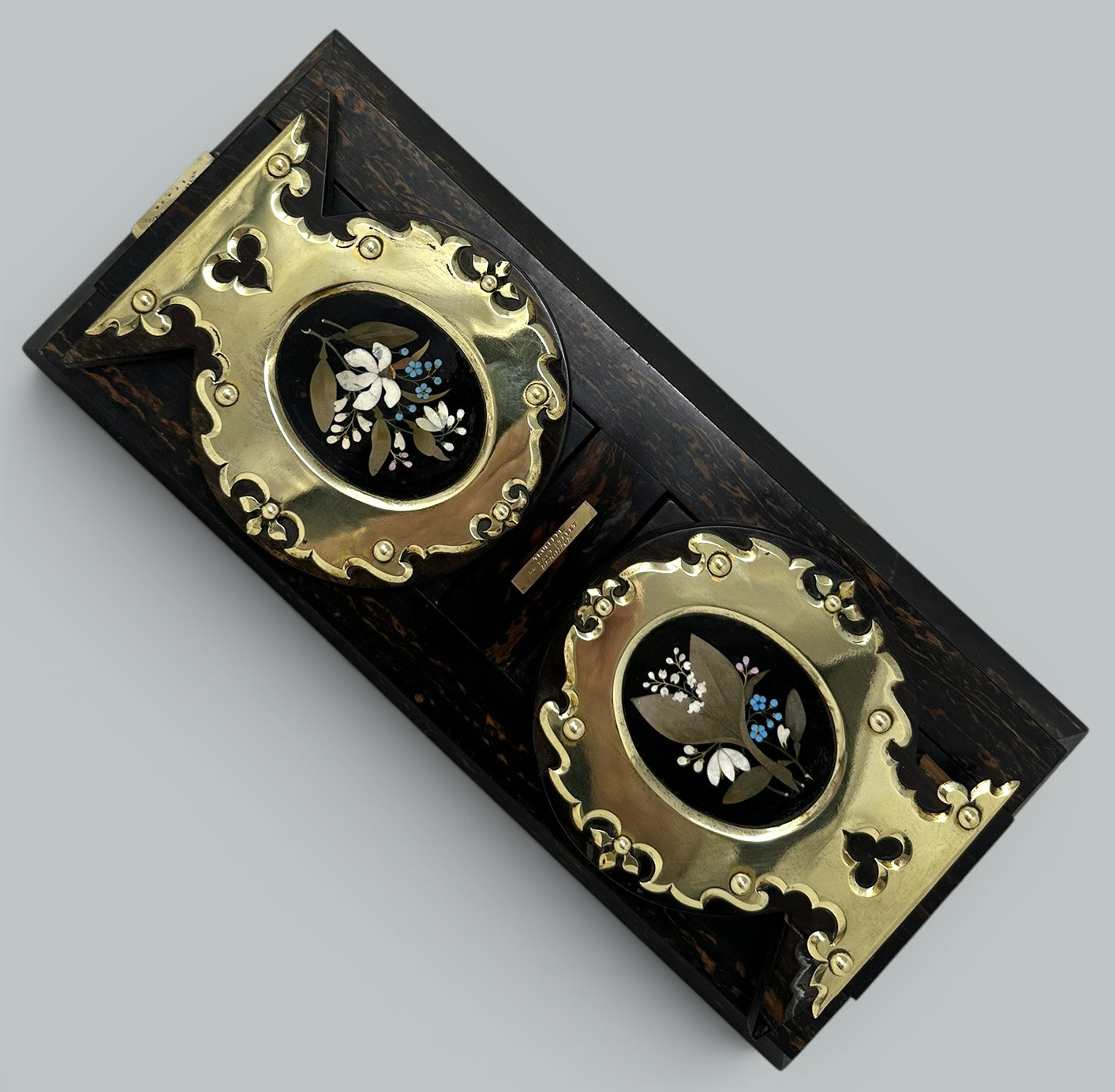
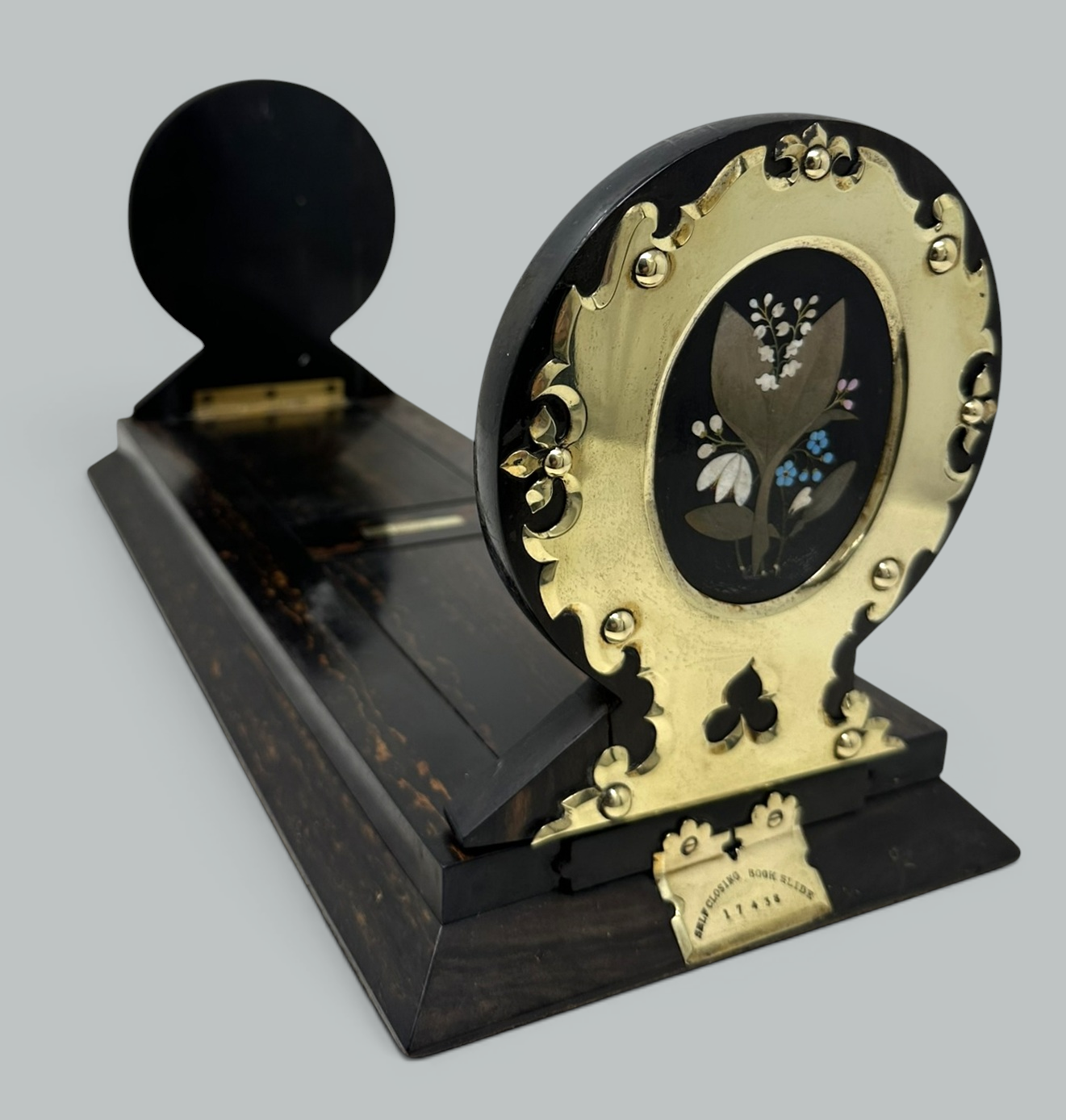
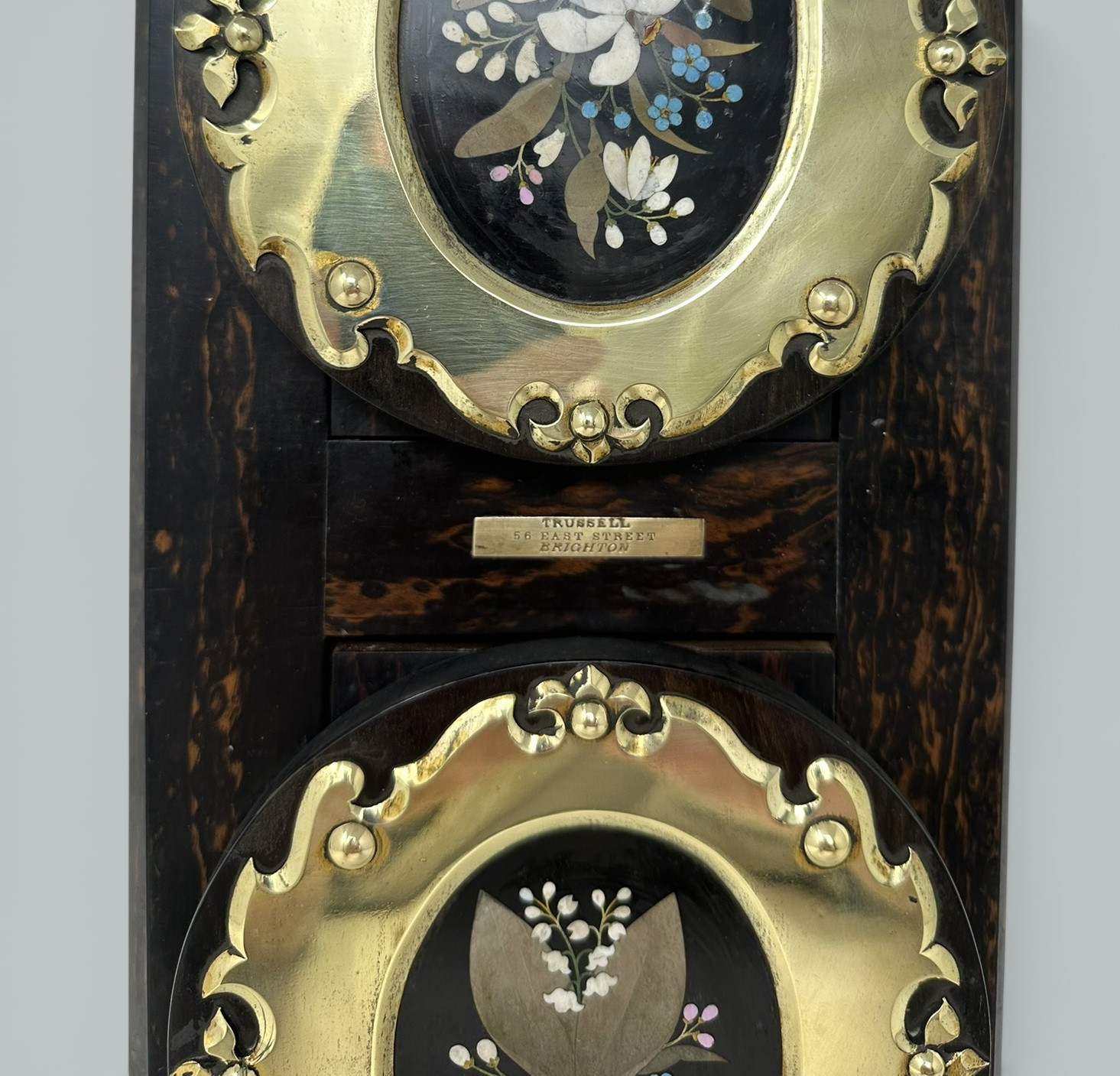
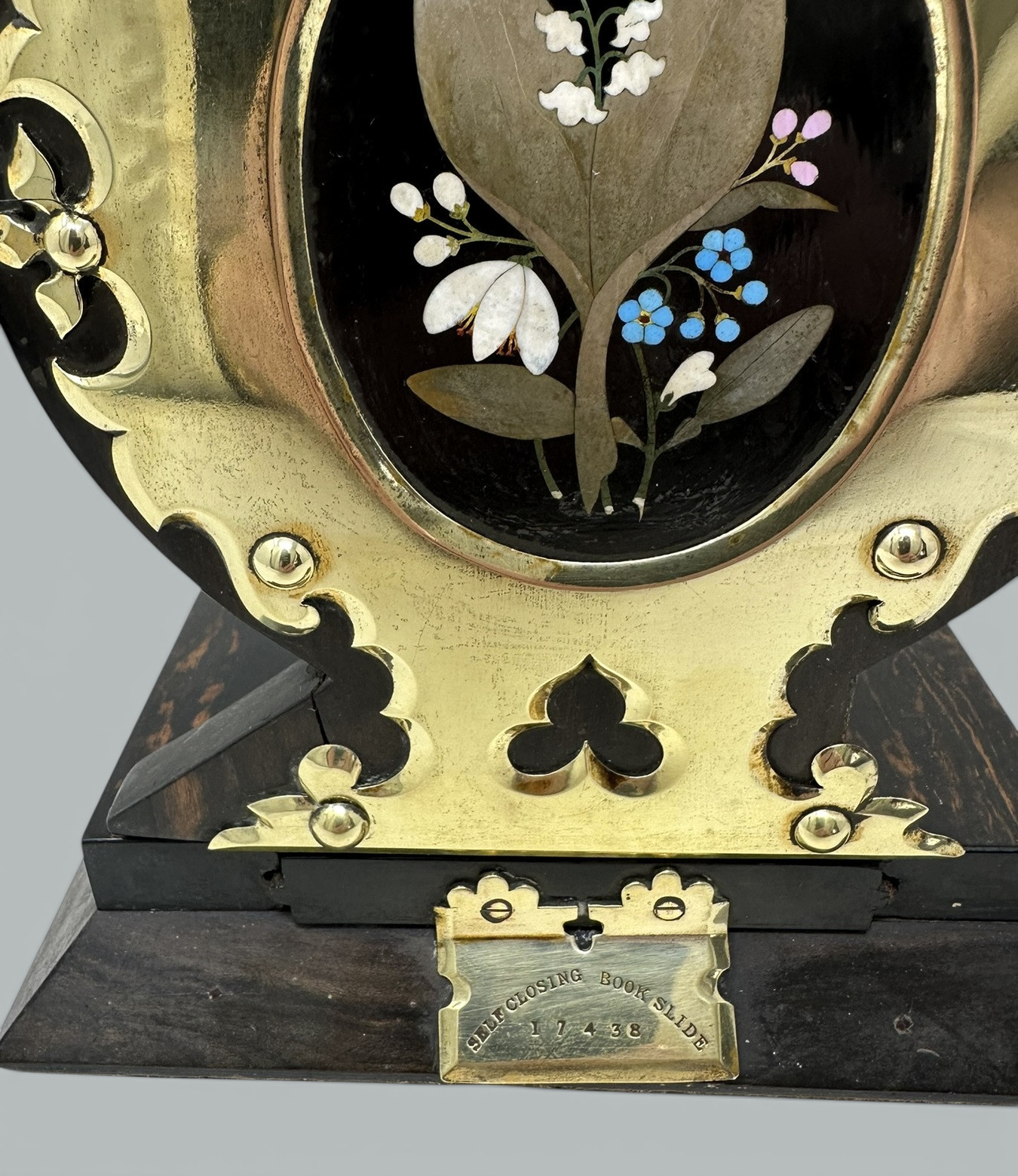
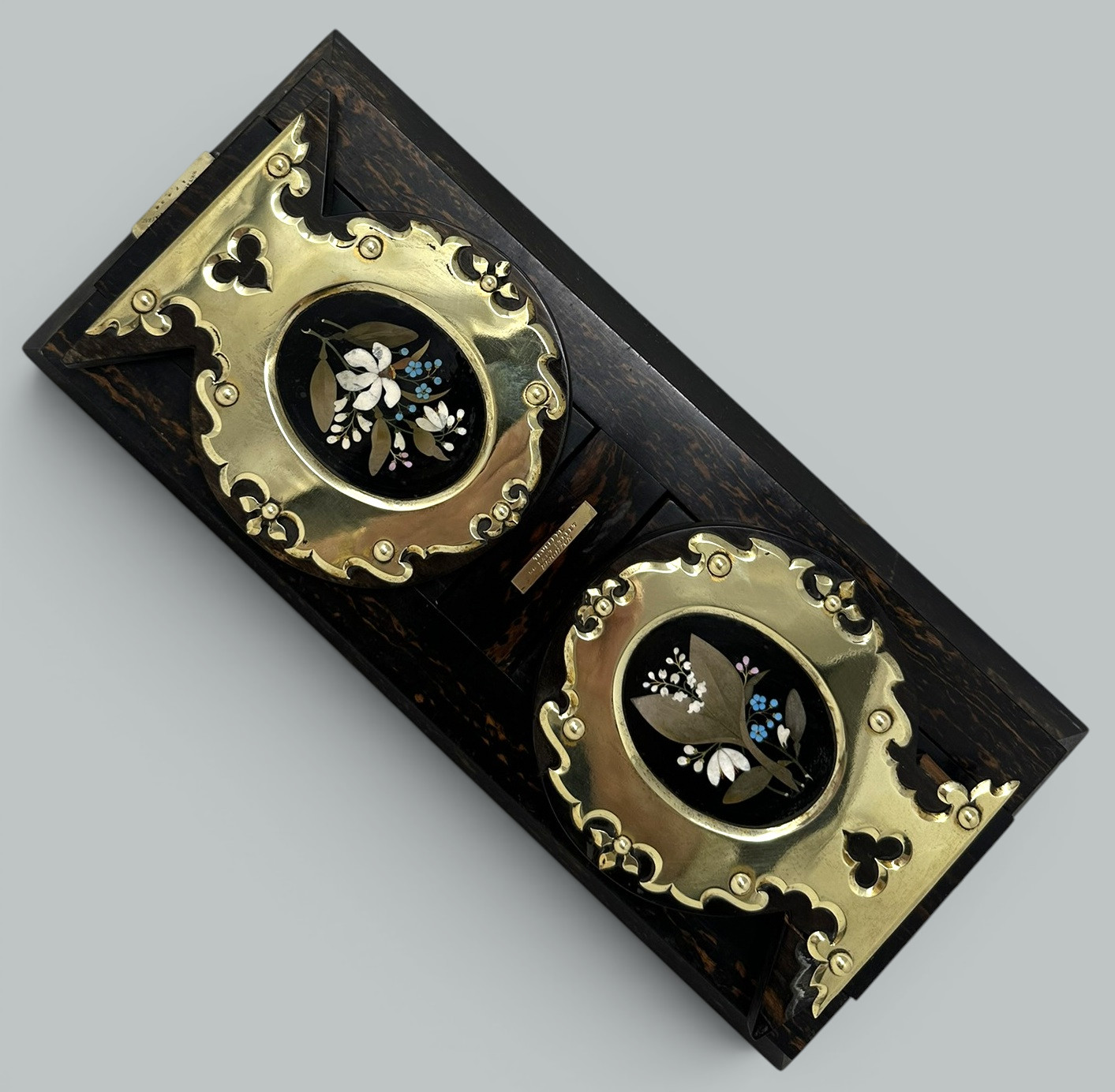
Absolutely stunning Coromandel Wooden extendable and foldable Bookslide of exceptional quality and traditional form. Mid Nineteenth Century, of English origin, made by renowned maker George Betjemann. Retailed by Trussill Book Shop 56 East Street Brighton.
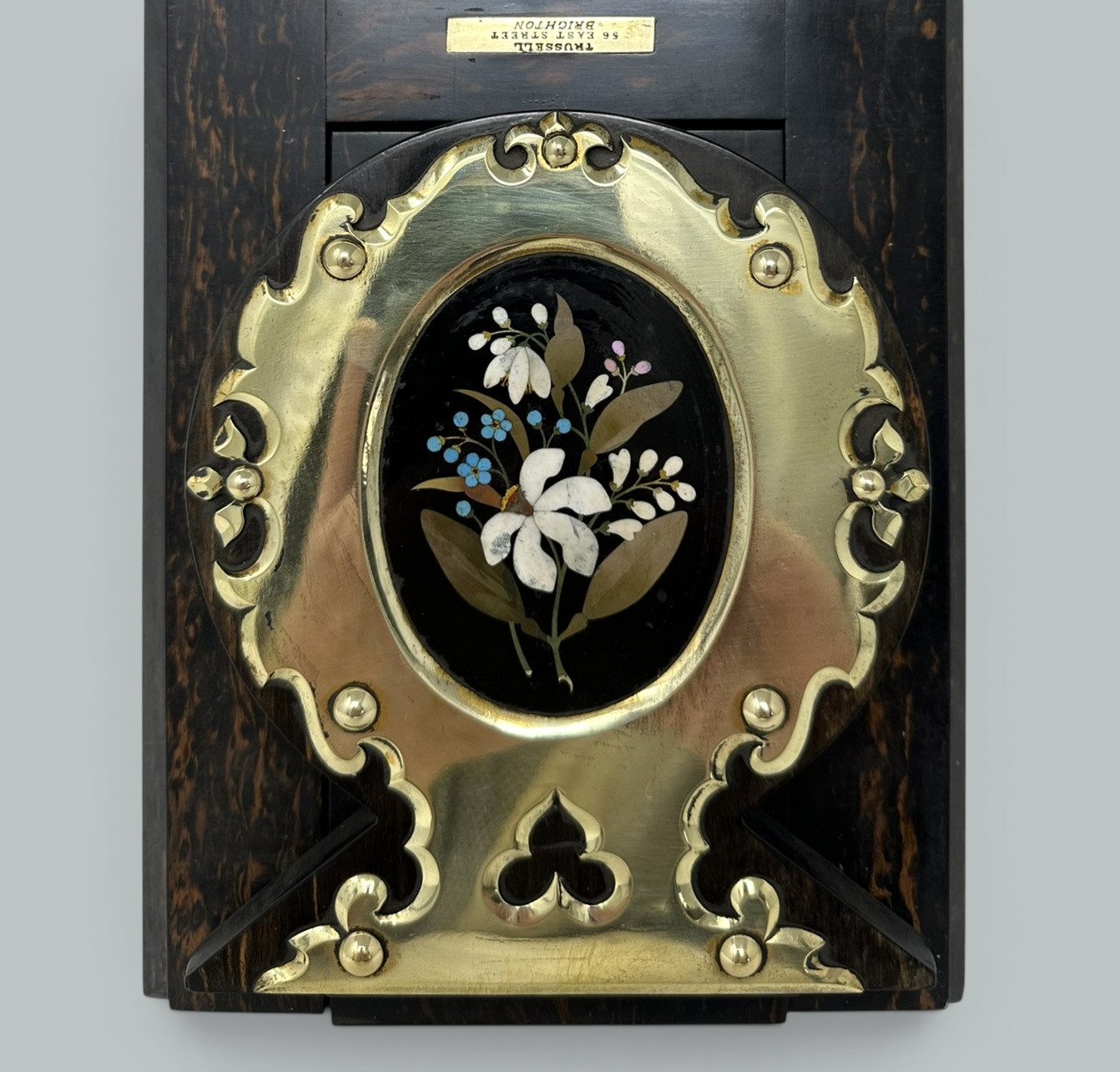
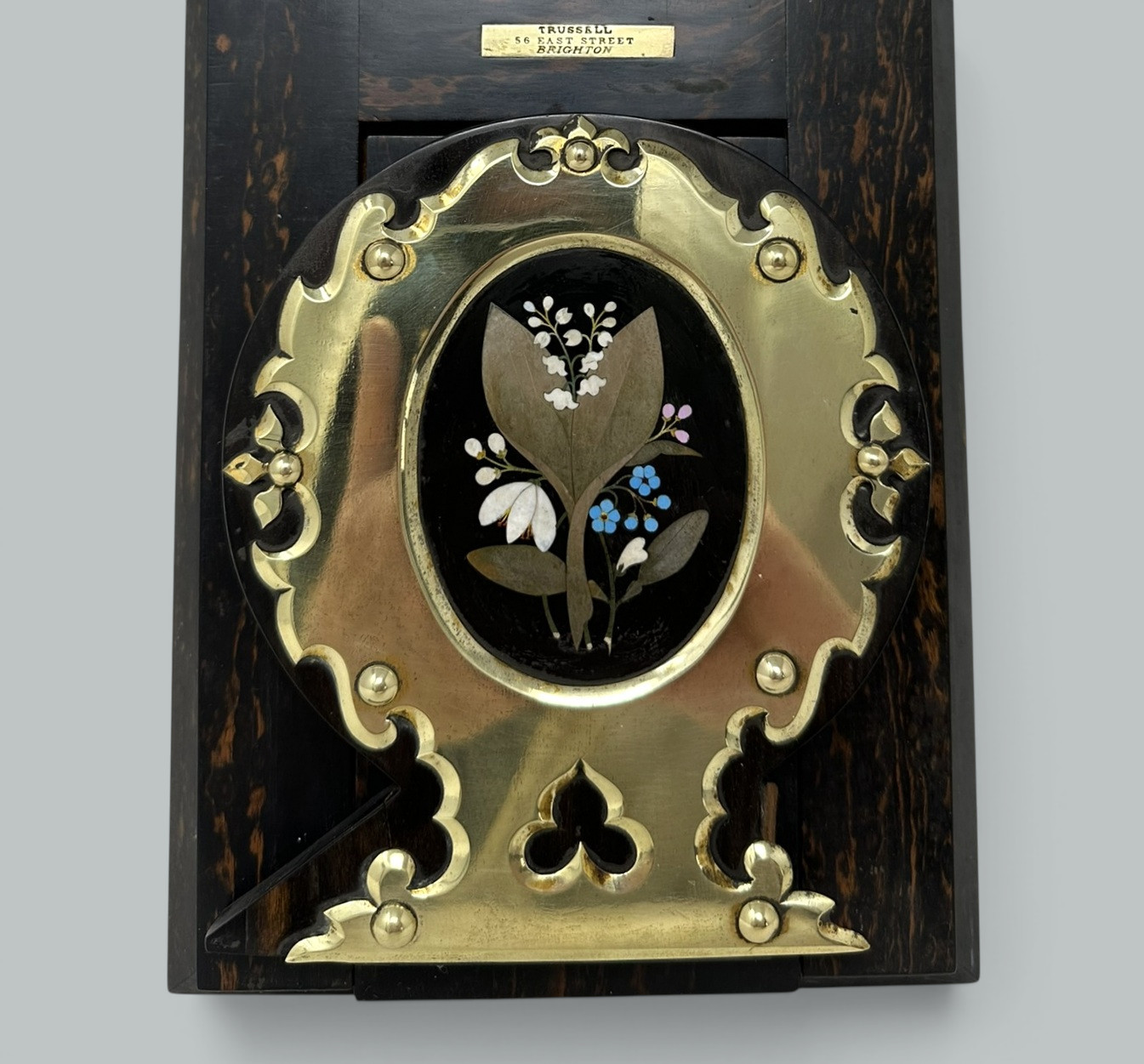
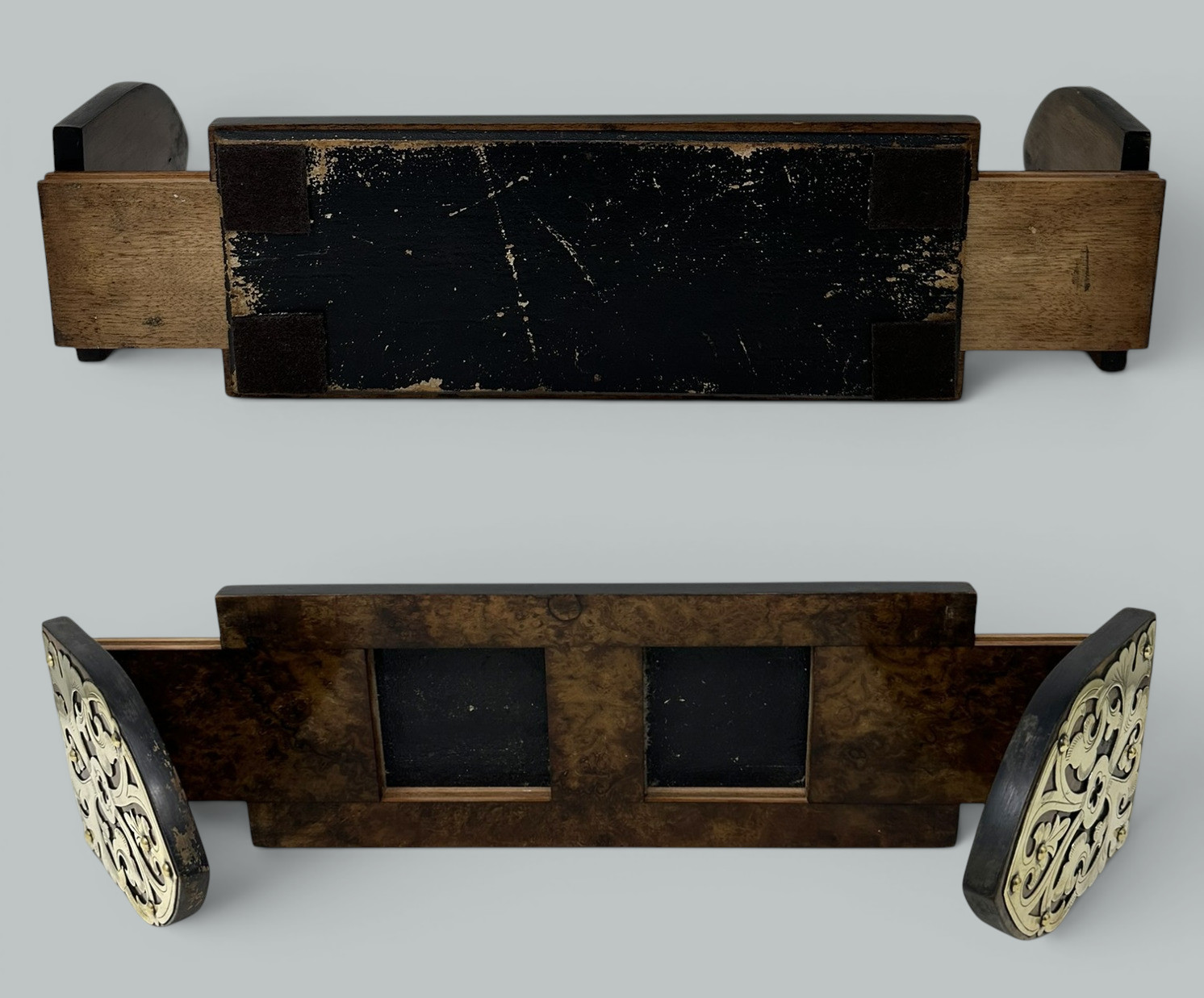
Each hinged folding flap mounted with polished brass profusely hand carved and elegantly etched depicting scrolling detailing, each central reserved lavishly Pietra Dura decorated depicting Summer Flowers and foliage. The main base body with extending mechanism.
Condition: Good firm condition with nice surface patination, professionally cleaned and re-polished. No carving losses, possibly has had little use.
Width: (at base closed, an impressive) 16.25″ (41cm). Width: (fully extended) 24” (61cm). Depth: (at base) 7” (18cm). Height: (entire opened) 8″ (20cm).
Eur.1250.00.
Location: Dublin City, Ireland.
Affordable Worldwide Store to door shipping offered by seller in house using UPS Shipping.
Pietra dura (literally “hard stone” in Italian) is a decorative mosaic art form. It involves intricately cutting, shaping, and fitting highly polished, colorful, semi-precious stones (such as lapis lazuli, agate, and jasper) into a stone or wooden background to create a detailed, “painted” image effect
Origins and History – Renaissance Florence: The technique was developed and popularized in Florence, Italy, during the 16th century. It was famously championed by the Medici family, who established the Opificio delle Pietre Dure (a famous workshop dedicated to the craft).Unlike traditional mosaics that use uniform square tiles (tesserae), pietra dura involves cutting stones into unique, interlocking shapes—like a jigsaw puzzle—so that the seams between them are virtually invisible. The process requires immense precision, as the hardness of the stones limits errors.
We are pleased to offer this listing showing Pietra Dura at its finest
George Betjemann & Sons, a renowned 19th-century London cabinet-making firm best known for inventing the “tantalus”—a lockable decanter stand, also to include Bookslides such as this exceptional example. Patented in 1881 by John Betjemann, this luxury barware allowed hosts to display fine spirits securely, preventing unauthorized access. The firm was also famous for its mechanical “Betjemann’s Patent” mechanisms in luxury dressing and jewelry boxes. The family firm produced exceptional, highly collectible Victorian and Edwardian pieces until the business closed in 1939, as Ernest Betjemann’s son, the poet John Betjeman, had no interest in continuing the trade. Today, their surviving items are sought-after antiques often found at high-end dealers.