719. Antique English Regency Rosewood Library Table Writing Desk Gillows Lancaster
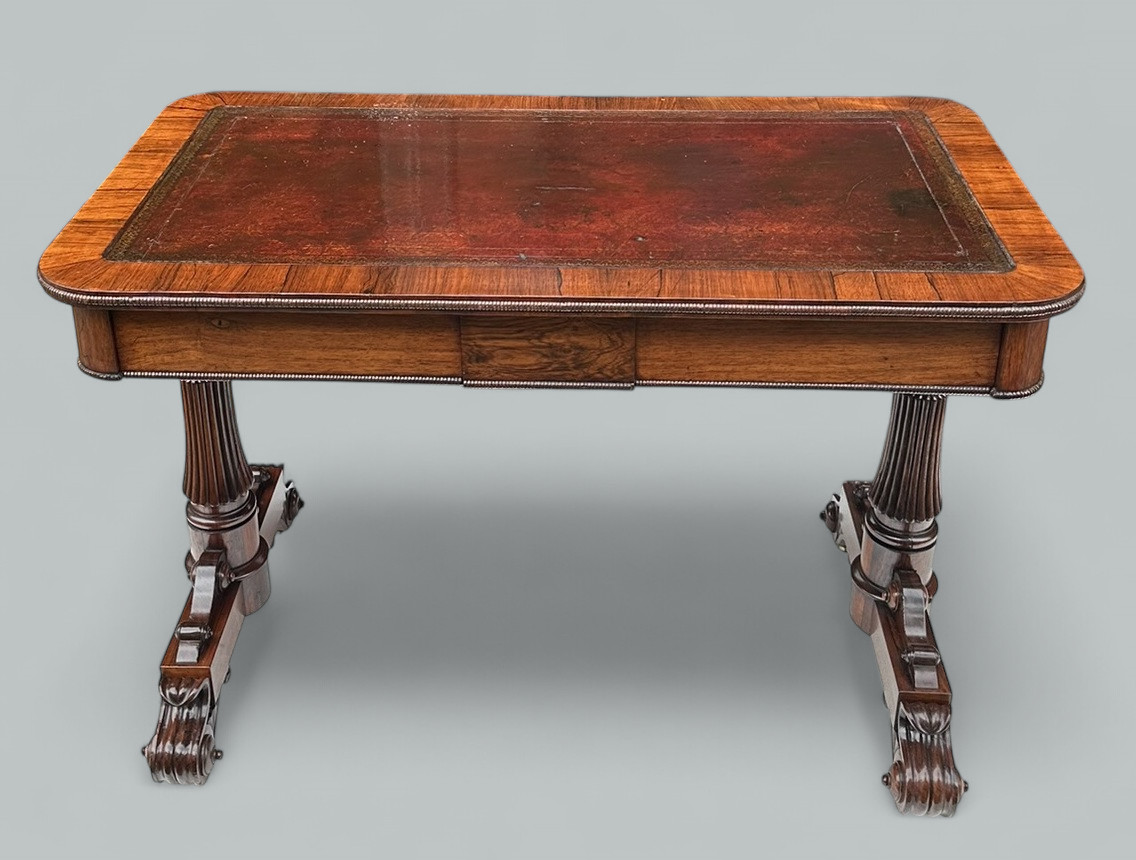
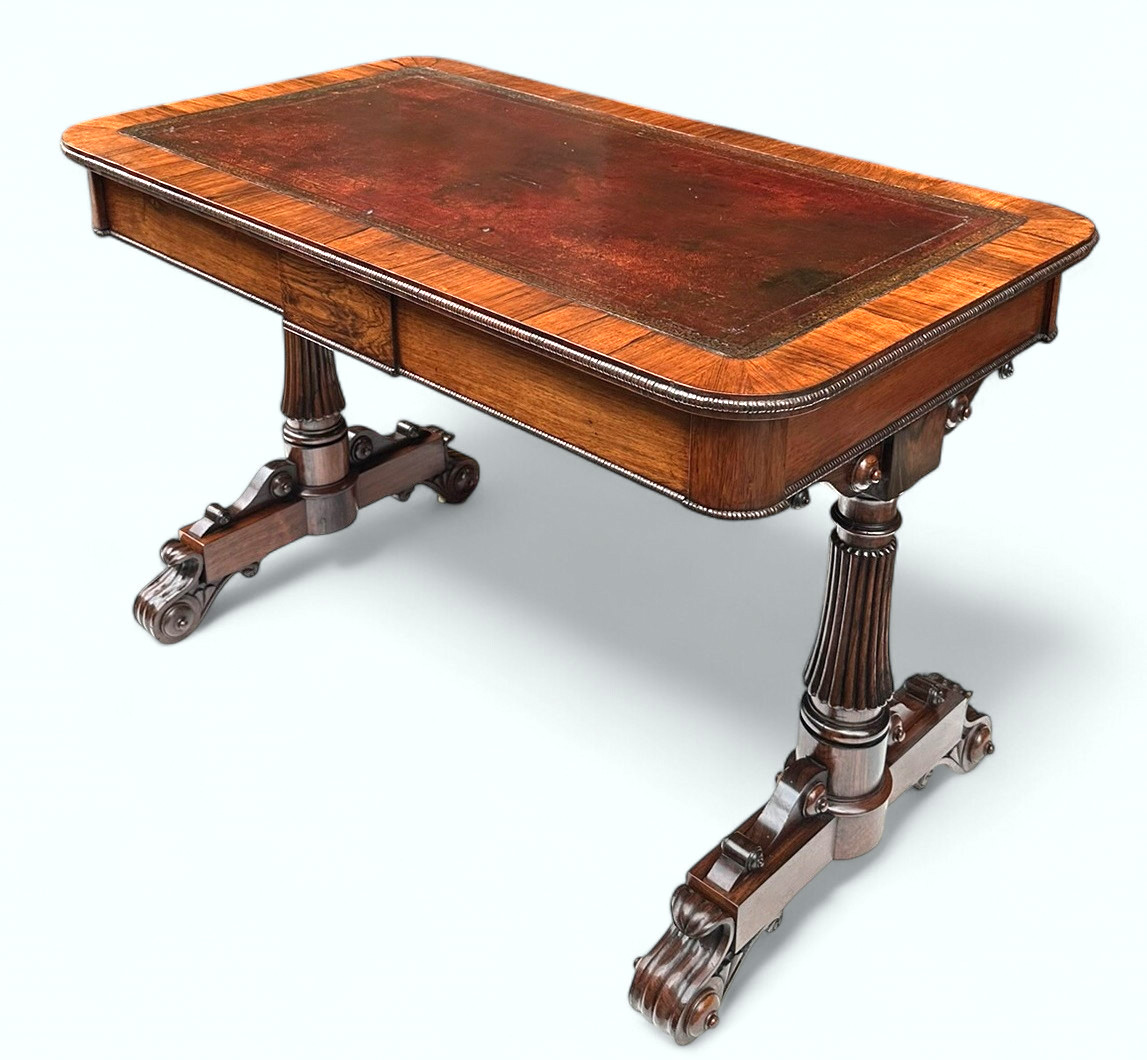
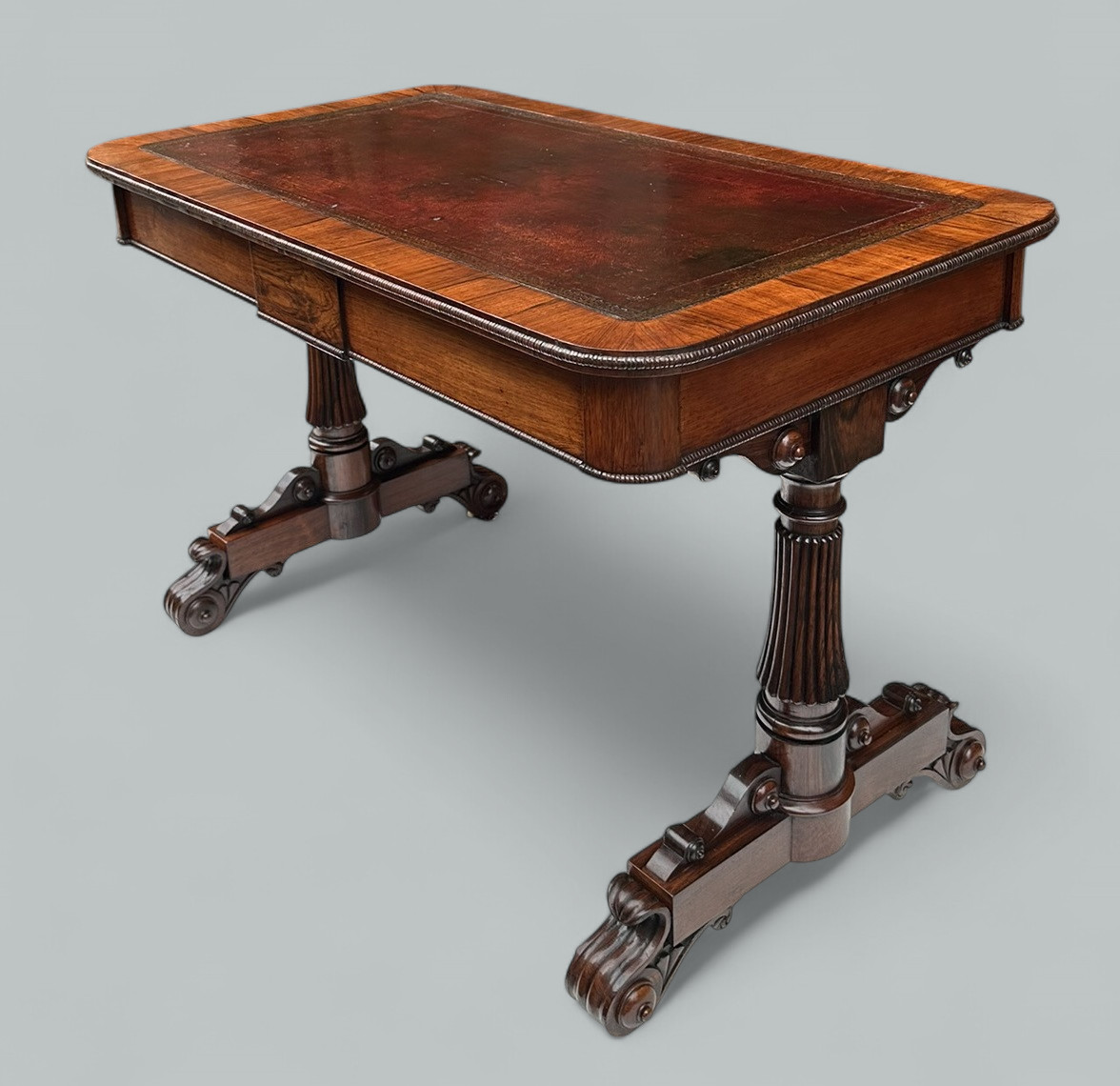
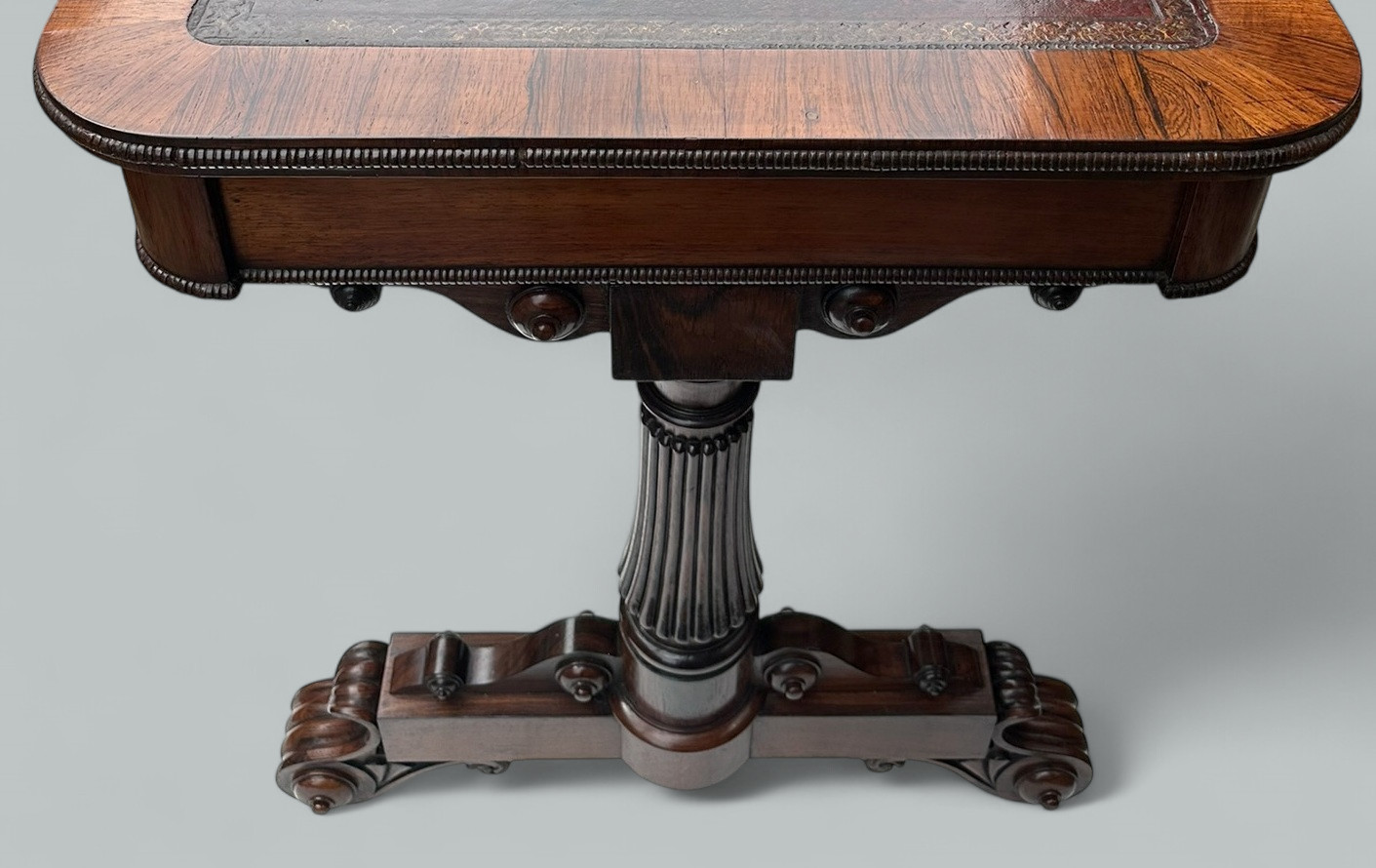
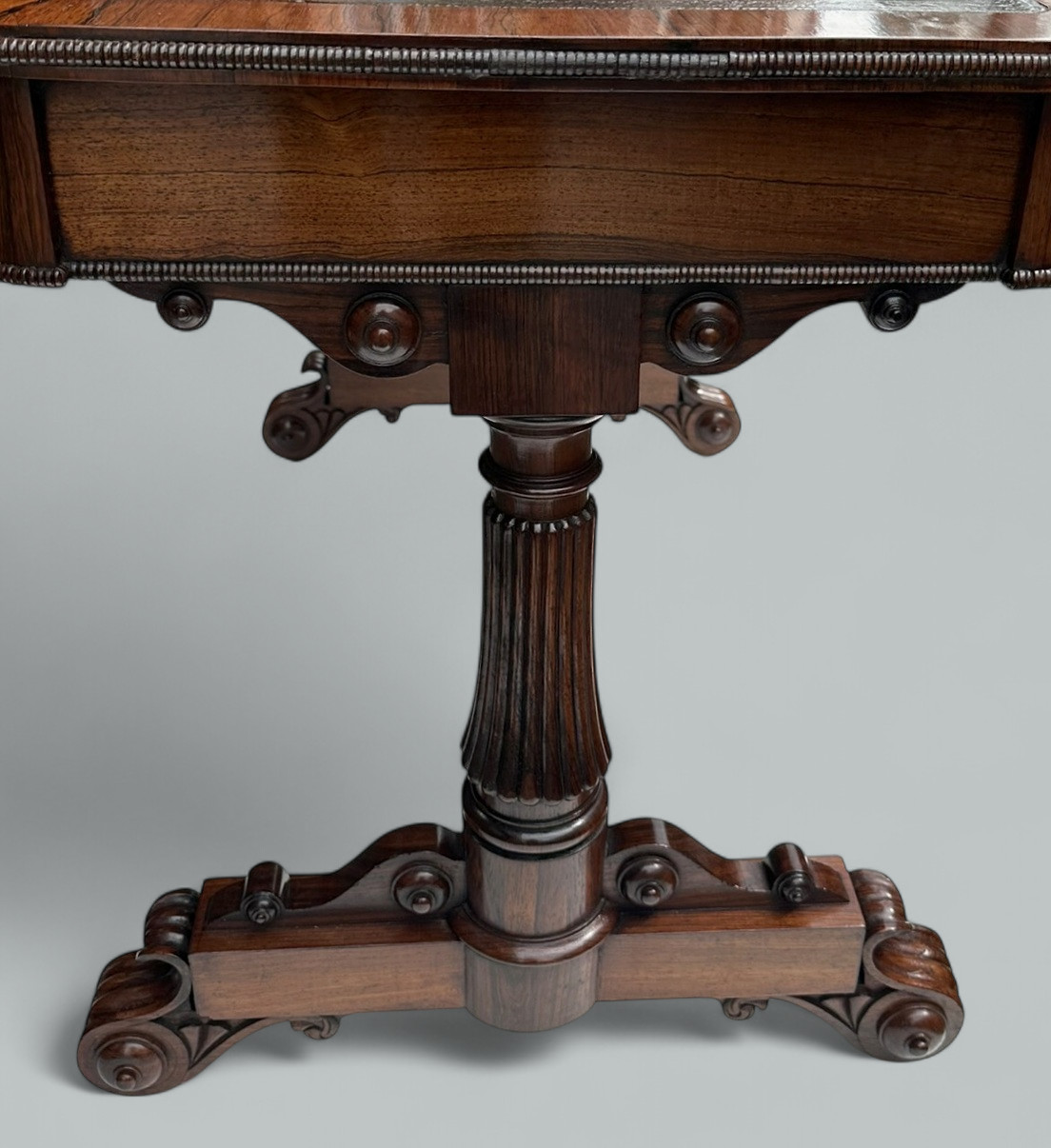
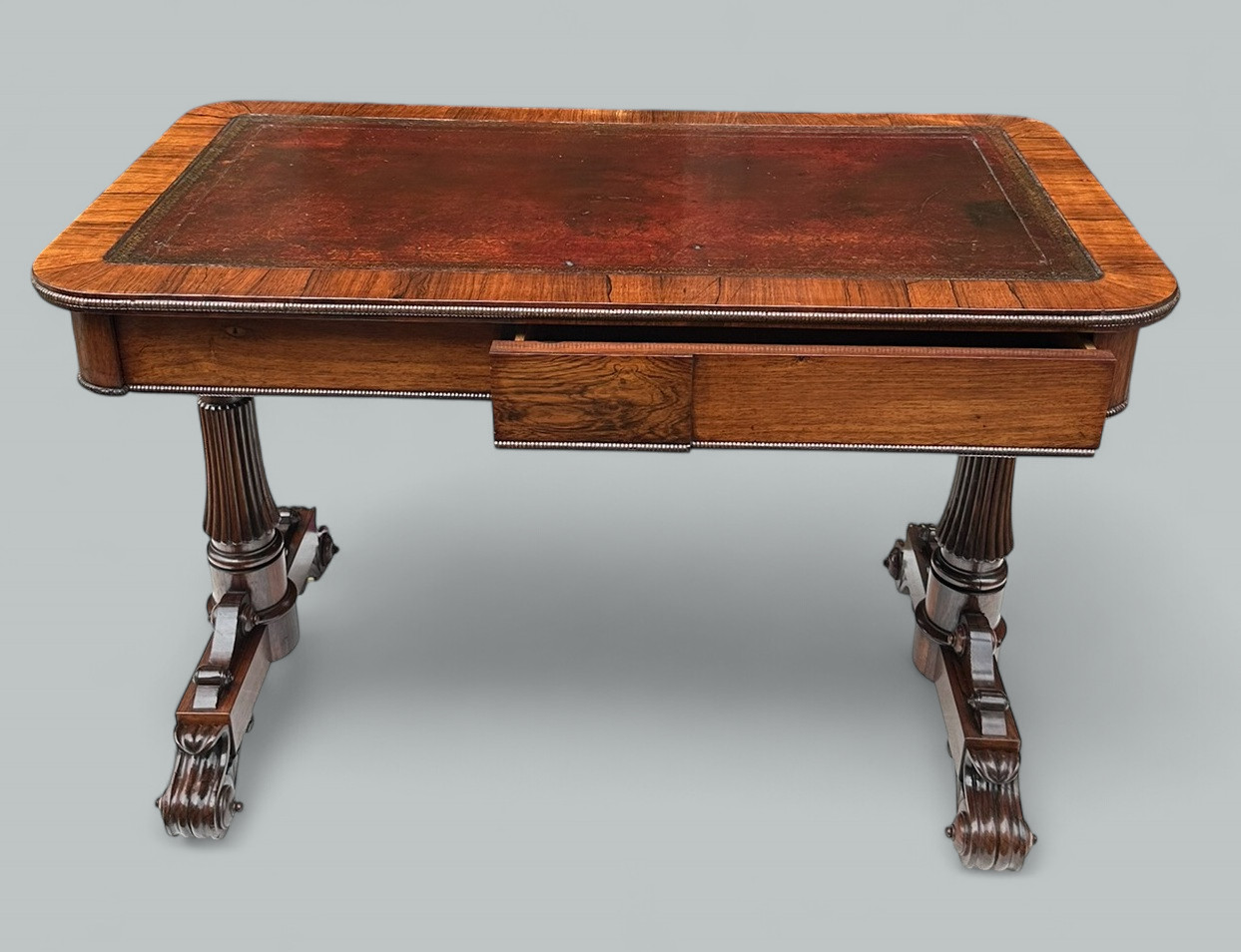
A Very Imposing example of an English well figured Rosewood Library or Writing Table firmly attributed to renowned Cabinet Makers Gillows of rectangular outline with rounded corners. Lare Regency period.
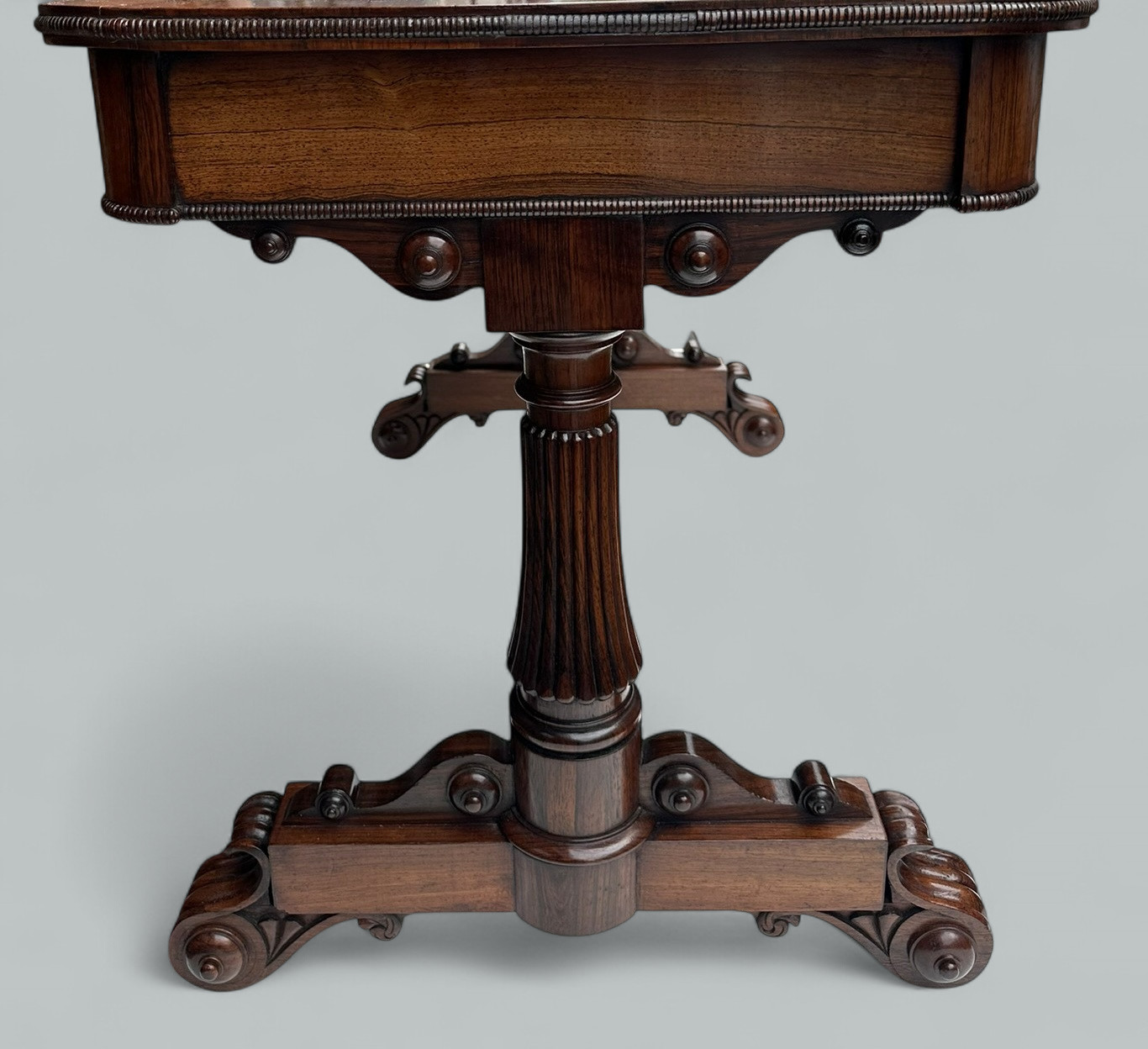
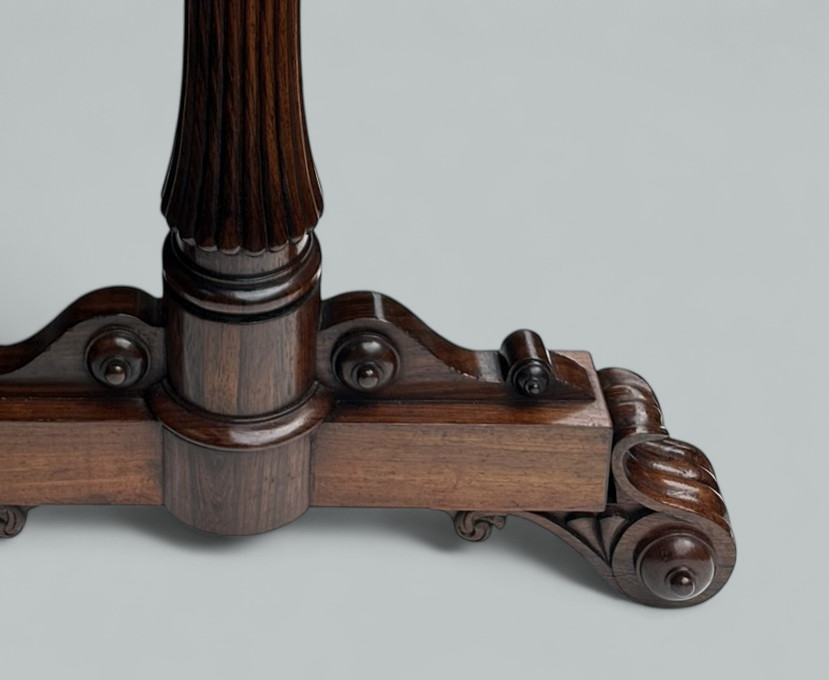
The leather tooled writing surface with twin drawers. Raised on the iconic reeded column supports, ending on highly decorative feet of which retain their original sunken castors. Superb colour and luster throughout this beautifully proportioned table, see close up images for viewing.
Condition: Good condition for such an early piece with no losses anywhere, nice surface patination allover. Back and front views are similar.
Width: (entire as shown at top) 42.25" (107.5cm). Height: 28.25” (71.5cm). Depth: 23.75” (60.5cm).
Eur.2250.00
Location: Dublin City, Ireland.
Affordable fixed charge Worldwide Store to door shipping offered by Seller in-house.
The Gillow family of cabinet makers and upholsters came to prominence with Richard Gillow (1733 – 1811), the son of Robert Gillow, founder of the firm. Gillow’s reputation as one of the leading British cabinet making firms of the 18th and 19th centuries was established by contributions from some ten members of the family over three generations.
During the 18th century, the Gillow firm established a reputation for producing the highest quality furniture, made by competent workmen from the best woods, in elegant but practical styles. These sometimes-incorporated ingenious devices. Gillows produced good, solid well- made furniture and were the only 18th century cabinet makers to establish and maintain a branch in both London (opened 1770) and the provinces. The Gillow Archives (now in the City of Westminster Archives Centre) comprise mainly the business records of the Lancaster branch from about 1728 to 1932 and include estimate sketches and memorandum books from 1759 to 1905.
They are the longest and largest cabinet maker’s records to have survived in the world.
The social status of members of the Gillow family changed as their wealth and influence increased, progressing from successful artisan craftsmen in the 1740’s to established members of the squirearchy by the early 19th century.