238. Antique Irish Satinwood Writing Desk Lectern Side Table Robert Strahan Dublin
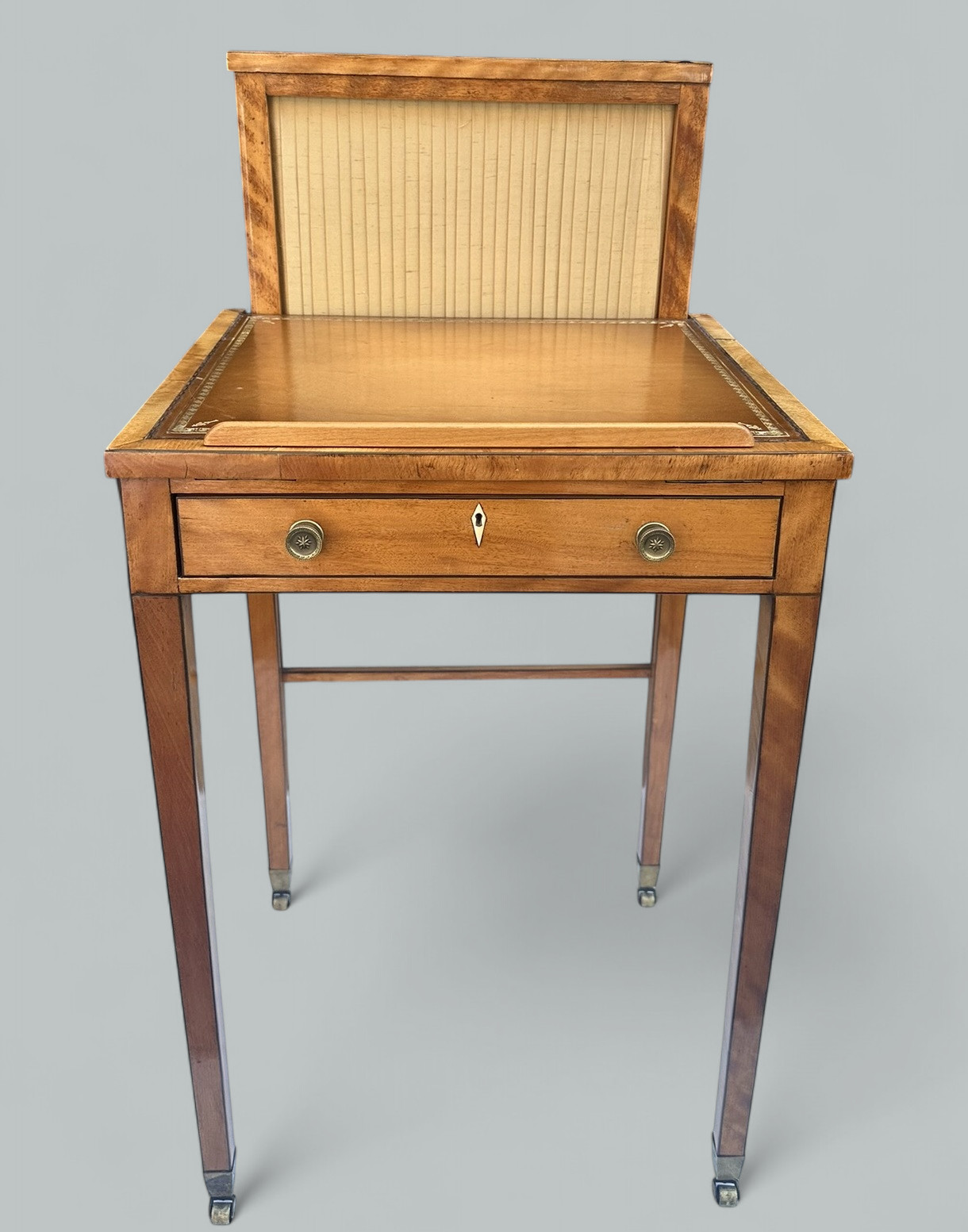
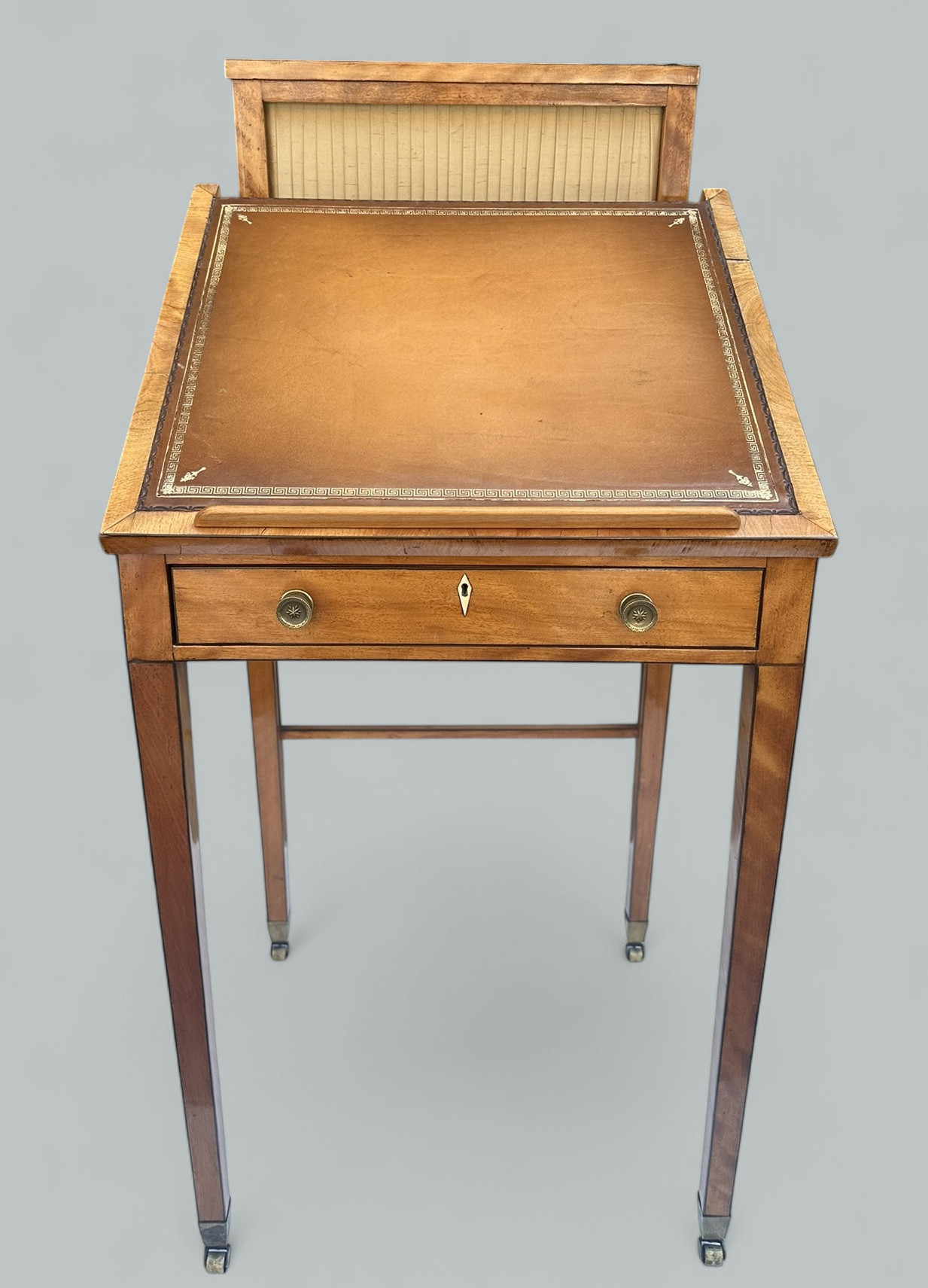
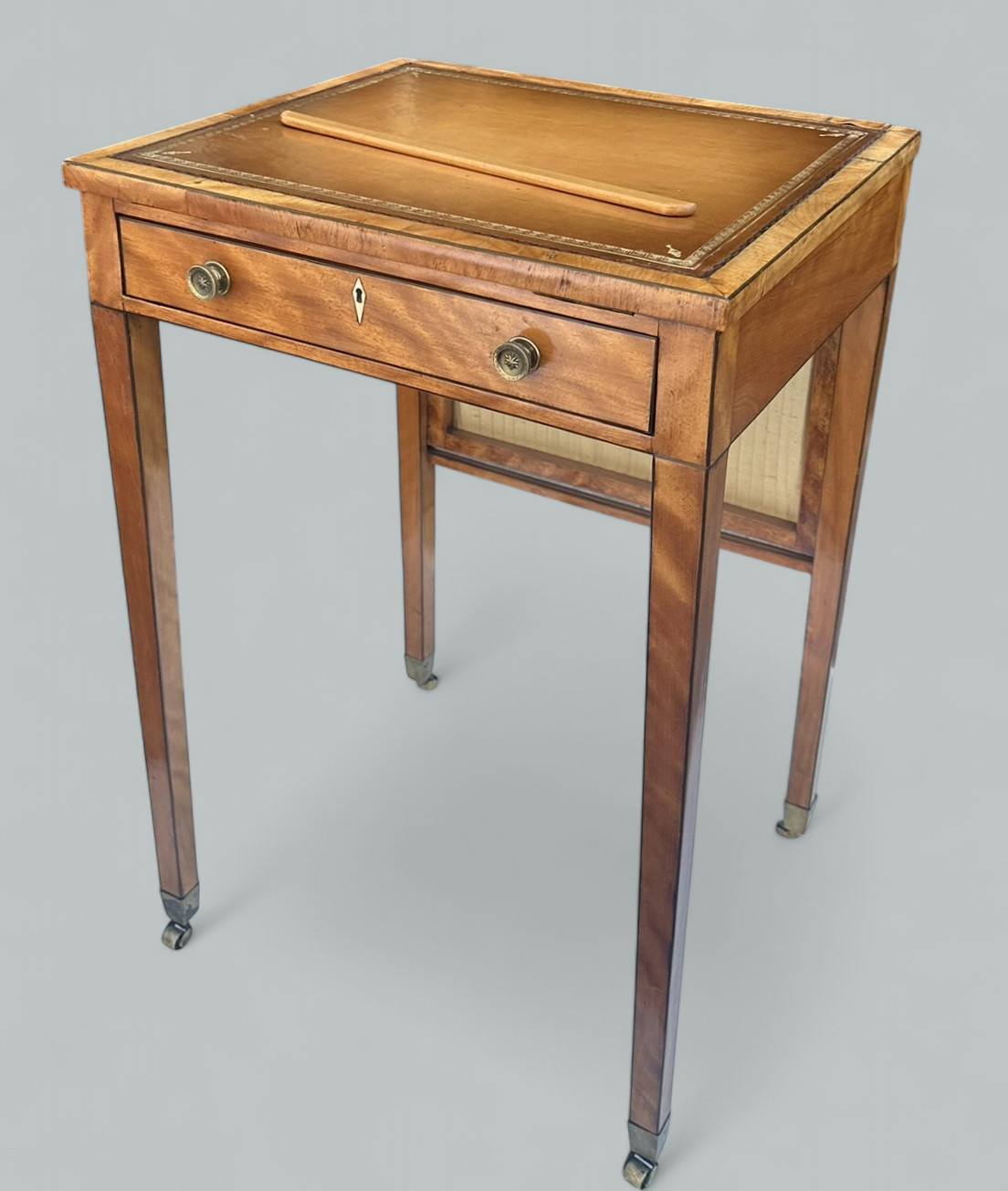
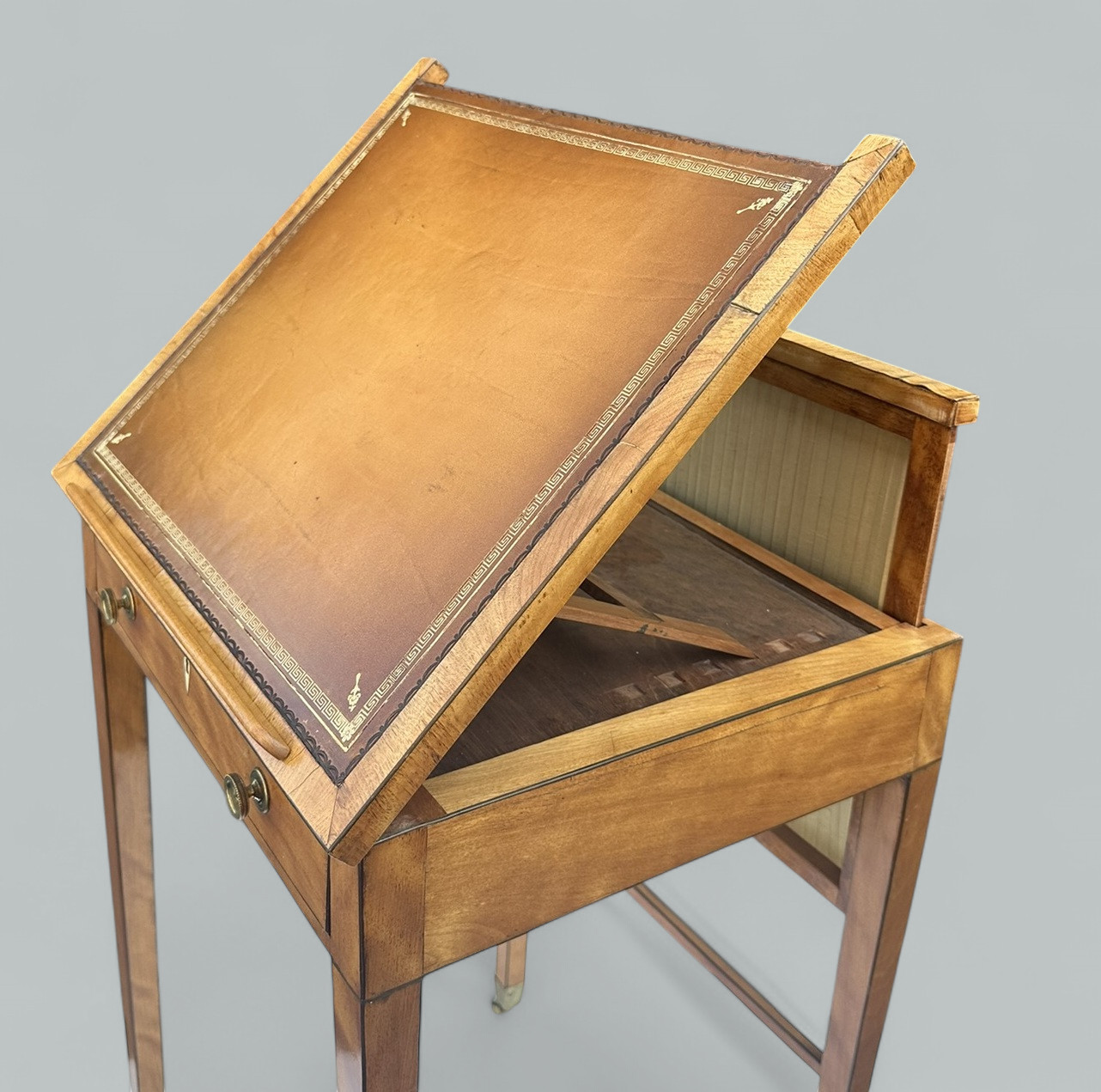
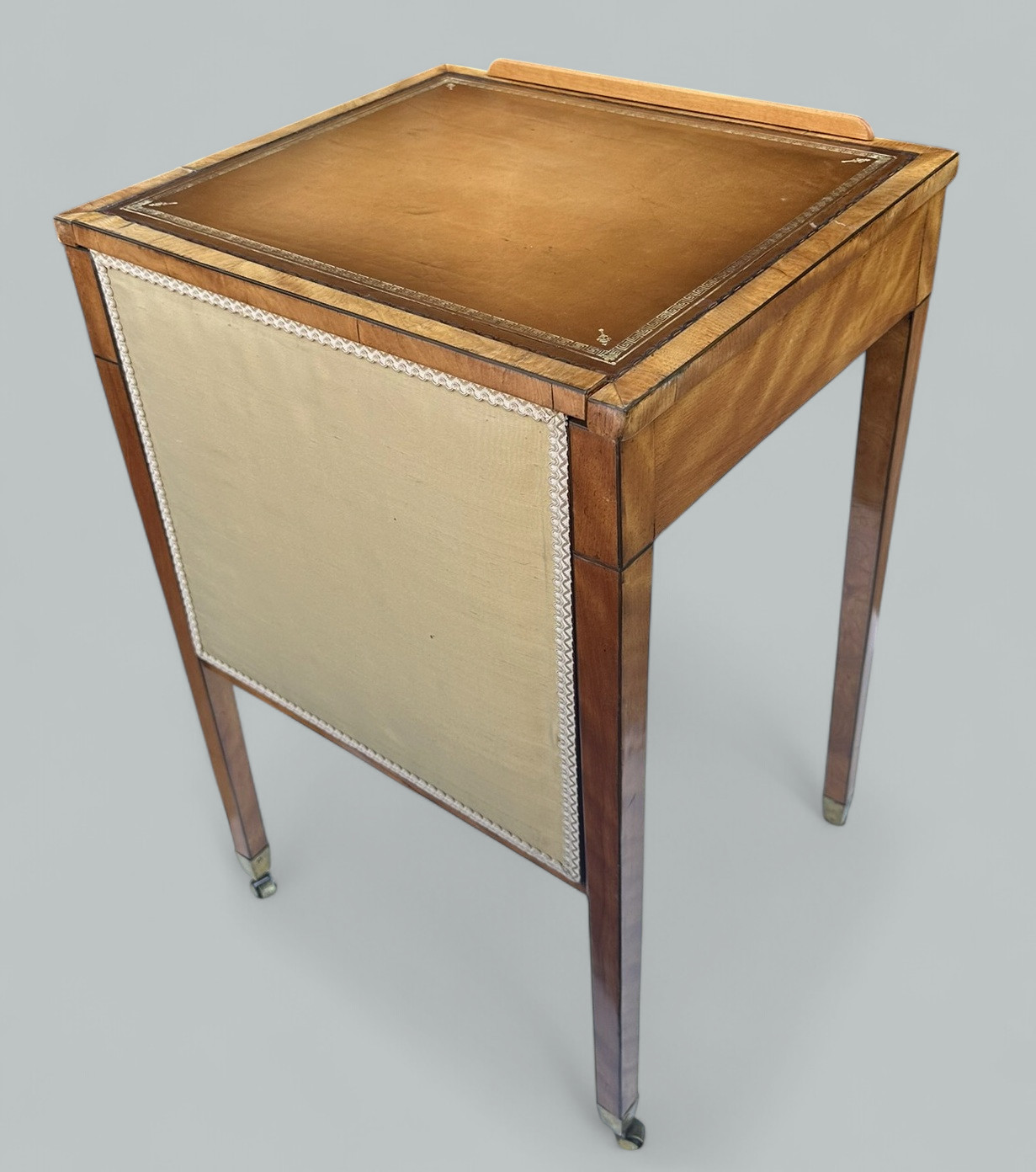
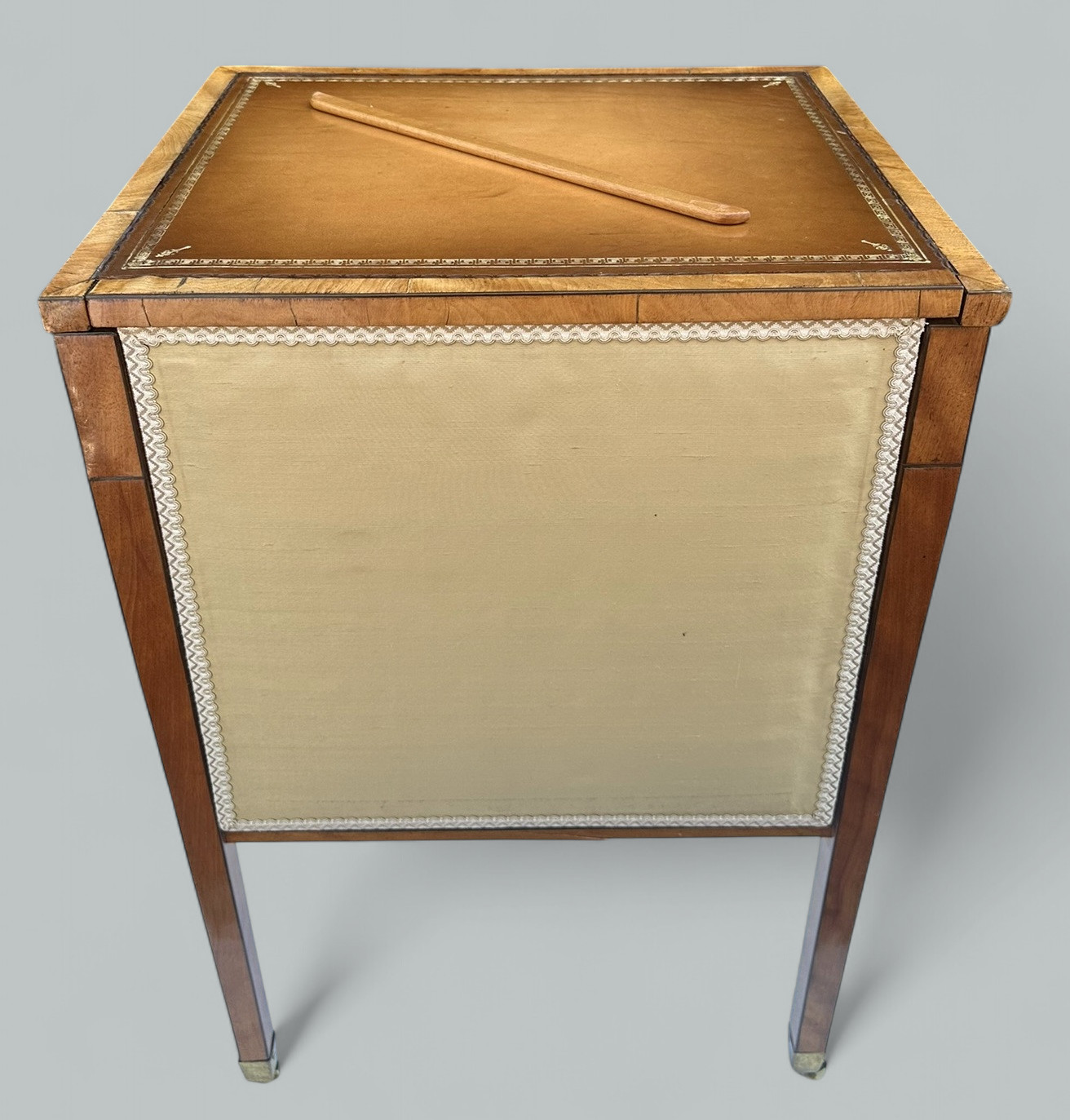
A Very Imposing example of an Irish well figured Satinwood rectangular Writing or Occasional Table complete with gilt tooled leather writing surface with lift up mechanism which could also be as a Lectern, an adjustable heat fabric silk lined shield is fitted at back area, made during the last half of the Nineteenth Century.
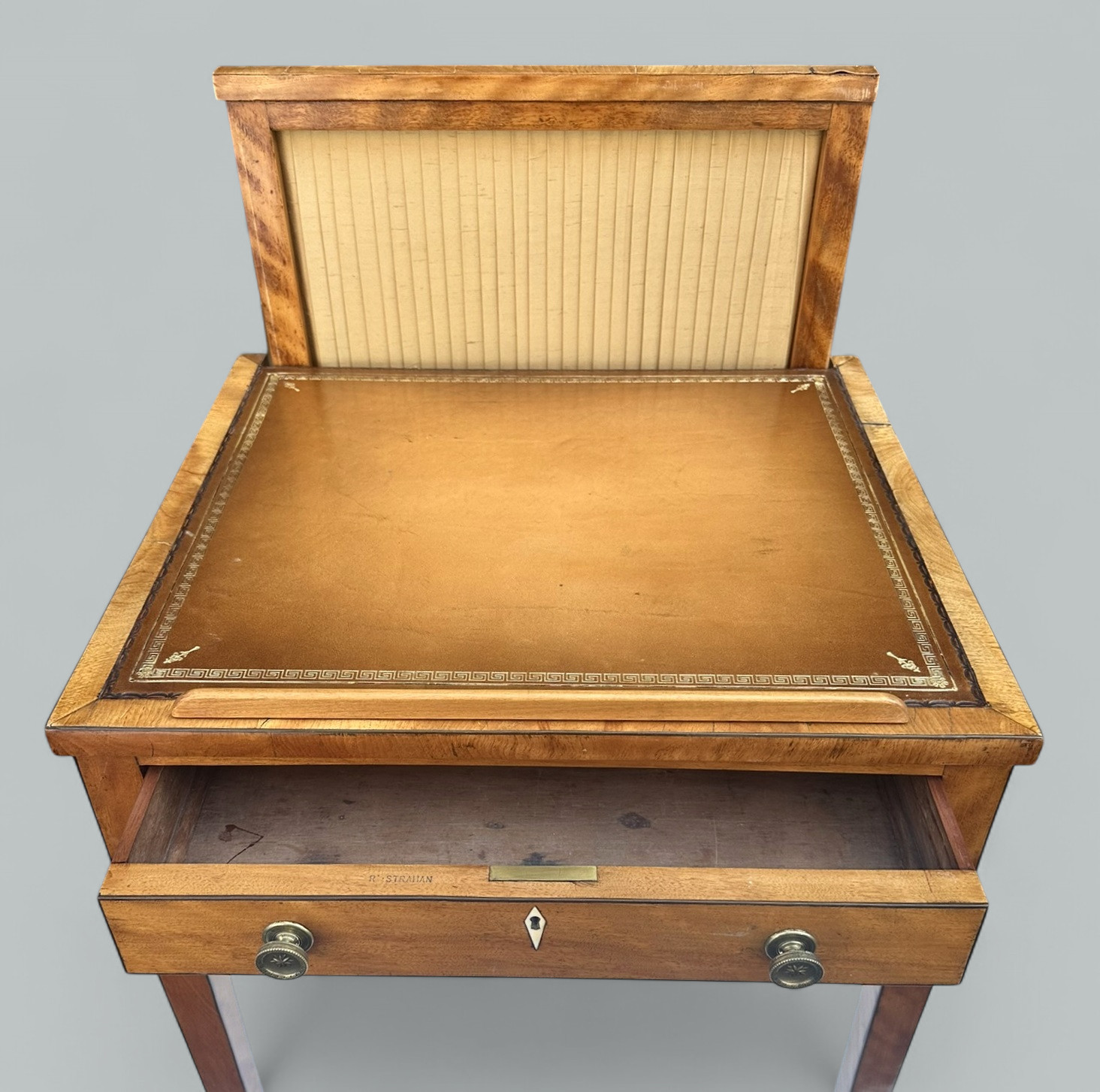
The adjustable rectangular surface above a single oak lined drawer with original brass handles and elegant ivory escutcheon, ending on foul square tapering legs, complete with polished brass castors.
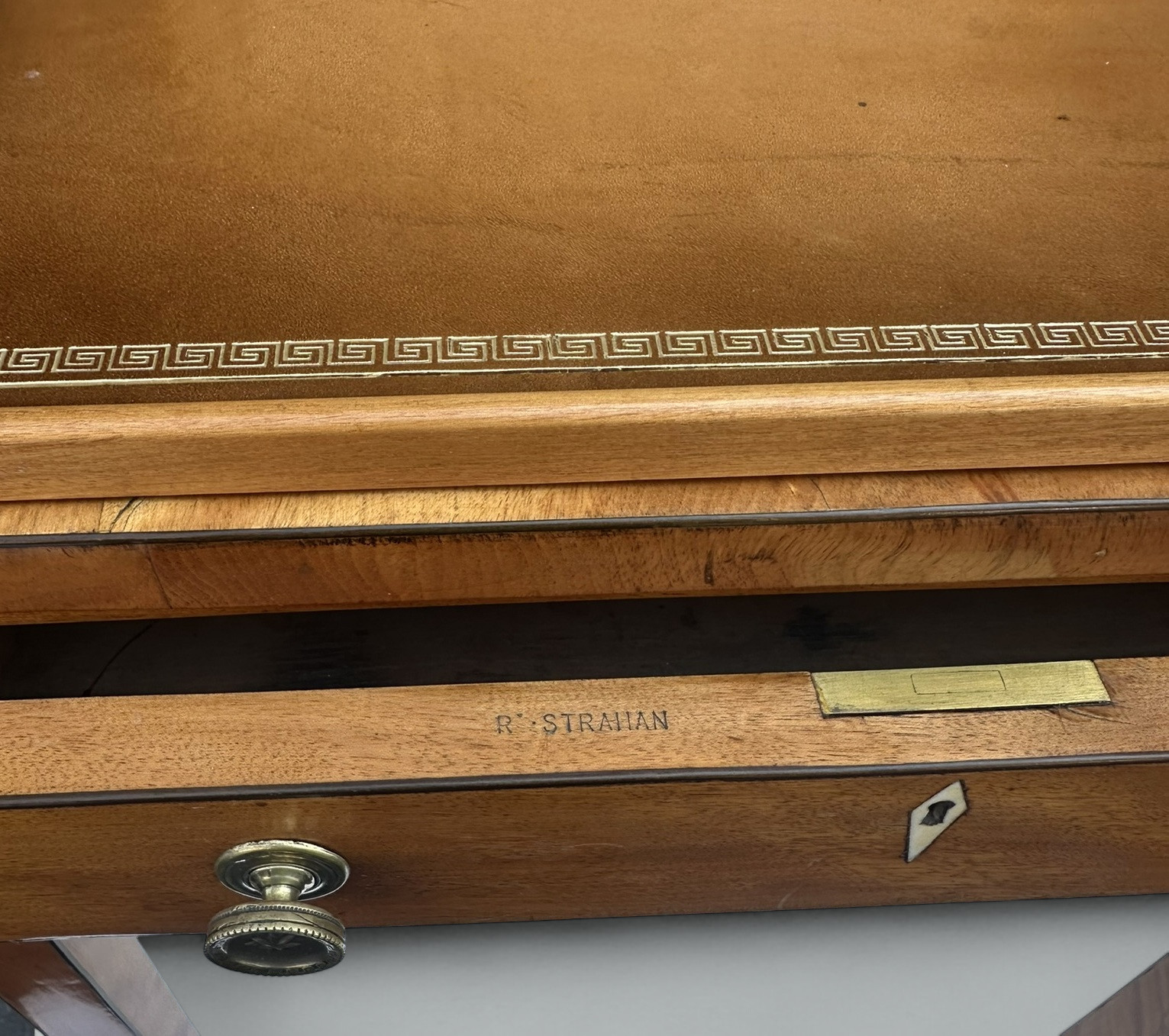
Condition: Good condition for such an early piece with no losses anywhere, nice surface patination allover. Maker’s mark impressed R STRAHAN
Width: (entire as shown at front) 19.5" (49.5cm). Height: (at front) 28.75” (73cm). Depth: 17” (43cm).
Eur.1275.00.
Location: Dublin City, Ireland.
Affordable fixed charge Worldwide Store to door shipping offered by Seller in-house.
Provenance: Sold at auction by Hamilton Osborne King Auctioneers at Humewood House Co. Wicklow Ireland July 1992.
Robert Strahan, Dublin, Ireland
Founded in 1776 as a cabinet maker, Robert Strahan & Co. grew to become one of Ireland’s premiere furniture designers, exhibiting at The Great Industrial Exhibition of 1853 in Dublin. A walnut table, exhibited at the second London International Exhibition of 1862, showcased their talent for both design and manufacture. Bringing together marquetry, scrolling foliage, masks, strap work and cartouches in a piece of some merit; A fine piece displaying the influence of Thomas Hope and Richard Bridgens, it was illustrated in the Art Journal Illustrated Catalogue for the London exhibition.Designing and manufacturing for the Office of public works, they gained the reputation for high quality furniture and were commissioned to design and manufacture for some of the great Irish country houses such as Doneraile Court, Co. Cork and Lisnavagh, Co. Carlow.
The Firm started out trading from 10-11 Chancery Lane. Move forward 39 years to 1815 and the firm had expanded in to 24-25 Henry Street. In 1845 it expanded further still into 5 Leister Street. In 1870 the firm moved to Abbey Street trading under the family name until 1969.